Scope of Work
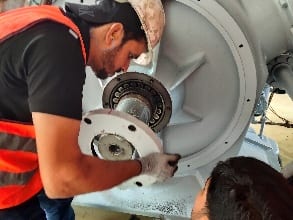
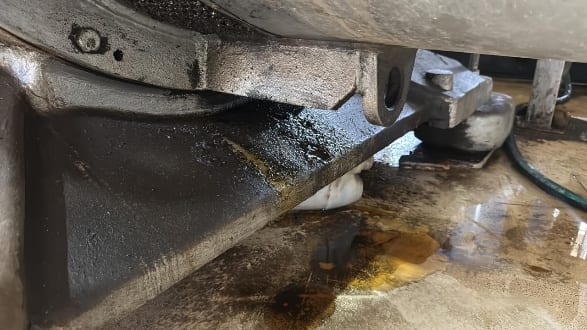
During the scheduled 8,000 running hours preventive maintenance, an inspection was carried out on the GD WH40H3N air compressor. Oil leakage was identified on the motor side of the compressor, requiring dismantling and replacement of the affected sealing components.
Job Summary
| Parameter | Detail |
|---|---|
| Client | Coca Cola |
| Site Location | Lahore |
| Machine Type | GD WH40H3N (Serial No: C004809) |
| Running Hours | 8,500 hours |
| Room Temperature | 46°C |
| Type of Service | Motor Oil Seal Replacement |
| Team Size | 4 certified field engineers (Adil Shahzad, M Awais, Fahad, Mobeen) |
Maintenance Activities Performed
Our engineering team executed the following corrective maintenance activities to resolve the oil leakage problem:
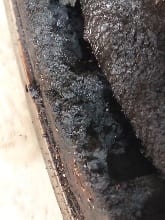
- Conducted a detailed inspection and confirmed oil leakage from the motor side of the compressor.
- Dismantled the rotor and motor stator assembly to access the leaking components.
- Sent the motor stator to the workshop for:
- Thorough cleaning and washing
- Electrical inspection and testing
- Application of insulating varnish treatment to enhance winding protection and insulation integrity
- Cleaned the rotor assembly using compressed air and performed a detailed inspection to identify any signs of damage, wear, or contamination.
- Replaced the following components with new OEM parts: Oil Seal, Distance Piece Gasket, Nut, Washer.
- Reassembled the rotor and stator assembly and installed all components in accordance with OEM specifications and recommended procedures.
- Performed alignment and assembly verification checks to ensure proper installation and mechanical integrity of the rotating assembly.
- Started the compressor and conducted operational testing under normal operating conditions to verify satisfactory performance and confirm successful rectification of the oil leakage issue.
Testing and Observations
Upon completion of the maintenance work, the compressor was started, tested, and closely monitored under normal operating conditions. The following observations were recorded:
- The compressor started smoothly and operated normally throughout the testing period.
- No abnormal vibration, unusual noise, or mechanical irregularities were observed during operation.
- The load and unload functions were tested and found to be operating correctly.
- Motor temperature remained within the acceptable operating range throughout the test run.
- The oil leakage from the motor side was successfully eliminated following replacement of the sealing components.
- All monitored operating parameters were found to be stable and within the manufacturer's recommended limits.
- Overall compressor performance was satisfactory, with no abnormalities observed during testing.
Critical Observation – Compressor Room Ambient Temperature: During our visit, the compressor room ambient temperature was measured at 46°C, which exceeds the maximum recommended ambient operating temperature of 45°C specified by the OEM. It should be noted that during peak summer conditions, the ambient temperature within the compressor room may rise even further above this limit.
Operation of the compressor above the OEM-recommended ambient temperature adversely affects the performance, reliability, and service life of the equipment. Elevated ambient temperatures reduce cooling efficiency and increase thermal stress on both mechanical and electrical components. Prolonged operation under such conditions can accelerate wear and deterioration of critical components, including:
- Pistons and piston rings
- Cylinder liners
- Connecting rods and bearings
- Valve assemblies
- Oil seals and gaskets
- Electric motor windings and insulation systems
- Lubricating oil and filtration components
Continued operation in an environment exceeding the OEM temperature limit may result in increased maintenance requirements, reduced component life, unexpected equipment failures, and unplanned production downtime.
We strongly recommend implementing corrective measures to maintain the compressor room ambient temperature within the OEM-specified limit of 45°C or below to ensure optimum compressor performance, maximize equipment life, and reduce the risk of premature component failure.
Conclusion
The scheduled 8,000 running hours preventive maintenance of the GD WH40H3N air compressor was successfully completed. The oil leakage issue on the motor side of the compressor was effectively rectified through the replacement of the oil seal and associated sealing components. In addition, the motor stator was cleaned, electrically inspected, and treated with insulating varnish to enhance its long-term reliability and protection.
Following reassembly, alignment verification, and operational testing, the compressor was found to be operating efficiently and reliably. All critical operating parameters were checked and confirmed to be within normal operating limits. No abnormal vibration, noise, temperature rise, or oil leakage was observed during the test run.
Maintenance Status
The compressor is fit for normal operation and may be returned to service. Continued monitoring and adherence to the recommended preventive and daily maintenance schedule are advised to ensure long-term reliability and performance.
Compressor Status: Operational and Released for Service ✅
Back to Home